Overview
A global third‑party logistics provider specializing in the wine industry-initiated development of a new 220,000‑square‑foot warehouse to support Italian wine producers and enable long‑term growth. Establish, Inc. was retained to support the planning and design of a greenfield warehouse facility intended to replace multiple existing operations while increasing storage capacity and handling efficiency.
The engagement focused on defining a flexible, scalable warehouse design capable of accommodating a wide range of pallet sizes and evolving operational profiles. The resulting solution established a robust foundation to consolidate operations, improve performance, and support phased implementation as business requirements continue to mature.
Project Details
Project Context
The client operated three separate warehouse facilities and sought to consolidate these operations into a single, modern distribution center. In parallel, the business aimed to expand market share, requiring additional capacity and improved operational efficiency. As a greenfield development, the project required a design approach that balanced maximum storage density with flexibility to adapt to uncertain future material flows.
Design Objectives
Key objectives for the new warehouse included maximizing storage capacity within the available footprint, enabling full flexibility to handle varying pallet sizes, and supporting phased implementation aligned with business growth. The design needed to remain adaptable as operational volumes, SKU profiles, and fulfillment strategies evolved over time.
Scope of Services
Establish, Inc. performed an assessment of existing warehouse operations to understand current processes, constraints, and performance drivers. Based on this assessment, design criteria were developed to guide the conceptual and detailed design of the new facility. Services included development of conceptual warehouse layouts, refinement through detailed design, and definition of scalable solutions to support both near‑term operations and future expansion.
Design Approach and Outcomes
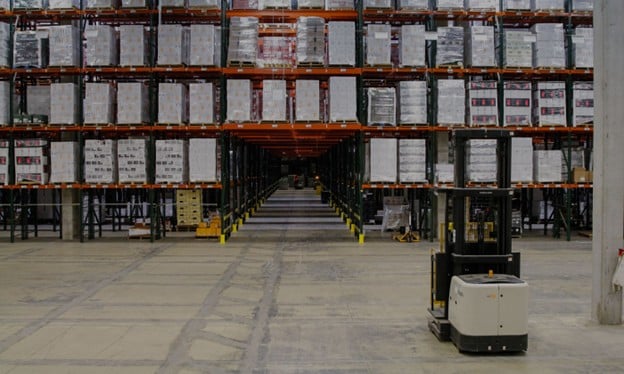
Because the final material flow and order profile were not fully defined at the outset, the design process followed an iterative approach. Repeated evaluations were conducted to balance flexibility against maximum storage density and operational efficiency. The selected solution combined very narrow aisle (VNA) storage with a phased implementation strategy, enabling high‑density storage while preserving the ability to adapt the layout as requirements evolve.
This approach provided the client with a warehouse design that supports consolidation of operations, improves handling efficiency, and allows for future changes without compromising long‑term performance. The project established a scalable, future‑ready distribution facility aligned with both current operational needs and anticipated growth.